1. Market Context
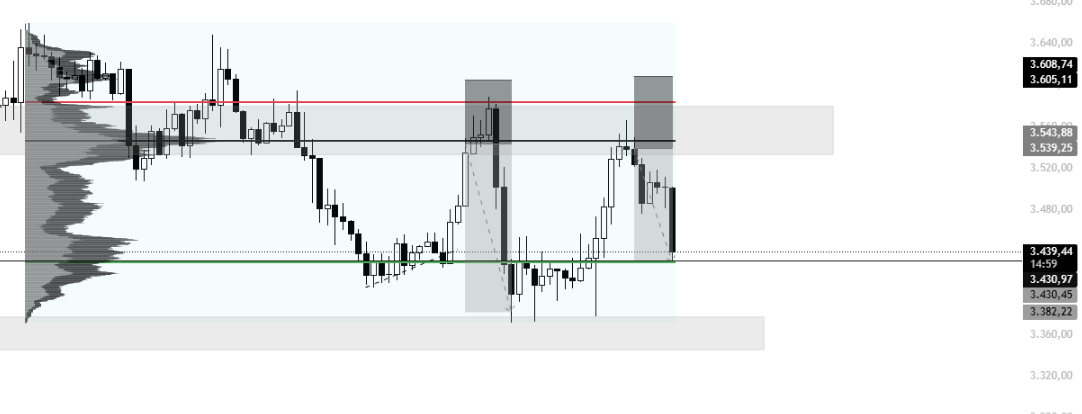
• After yesterday’s late-session shorts (below the POC) that ended unnecessarily and got stopped out, the market reclaimed the Point of Control (POC) overnight with strong bullish momentum.
• This reclaim led price back into the Value Area High (VAH) region.
• The environment transitioned from bearish rejection setups to a retest and potential short from VAH after the reclaim.
⸻
2. Entry Trigger
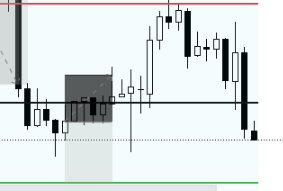
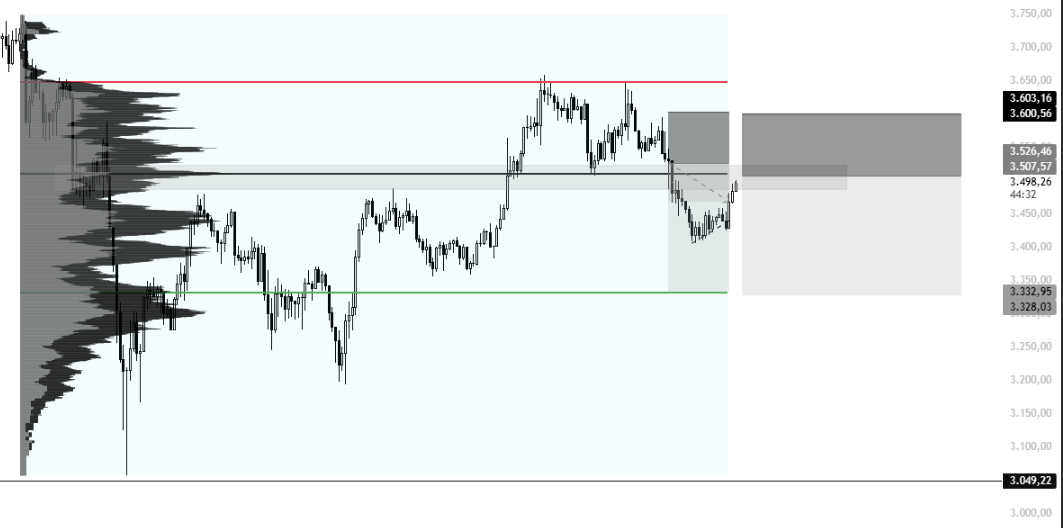
• The short setup was initiated after a 1-hour candle closed below the VAH, signaling rejection from the upper boundary of the value area.
• Entry: 3,537 USD
• Stop Loss: 3,608 USD
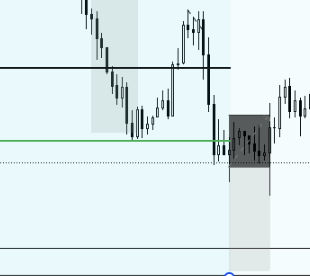
• Take Profit: 3,430 USD
• The initial take profit was set lower, but later adjusted upward after recognizing that the volume profile range was incorrectly anchored too far back.
• After correcting the range, the setup had a 1.6 Risk-to-Reward ratio, which remained acceptable.
⸻
3. Trade Details
• Entry: 3,537 USD
• Stop Loss: 3,608 USD
• Take Profit: 3,430 USD
• Risk-to-Reward Ratio: 1.6 : 1
• Reason for adjustment: Realized the initial range was drawn over a broader section than intended, skewing the levels. After correction, trade was still valid within the smaller range.
• Result: Executed cleanly with good precision on entry, stop, and target placement.
⸻
4. Trade Rationale
• Setup based on rejection from Value Area High following a strong reclaim of the POC.
• The rejection candle provided confirmation for a short entry back toward midrange support.
• Clean structure, consistent with strategy rules, and strong volume confirmation on rejection.
• Adjustment to the correct range demonstrated adaptability and situational awareness.
⸻
5. Execution & Emotions
• Execution quality: Very good — disciplined, rule-based, and calm.
• Emotional state: Focused and confident after recognizing and correcting earlier volume range mistake.
• No impulsive behavior; strong improvement from previous sessions.
• Trade planning, management, and correction process were all handled well.
⸻
6. Lesson Learned
• Always double-check the Volume Profile anchor point before execution — incorrect range selection can distort levels.
• A smaller R:R is acceptable if the trade setup is structurally sound and rule-compliant.
• Patience and clarity lead to consistent, low-stress trades.
Strategy: Volume Profile (Value Area High, Point of Control, Value Area Low)
⸻
1. Market Context
• This trade was taken late at night, following two successful shorts earlier in the day (BTC and ETH), both of which hit their Take Profits at the Point of Control (POC).
• After breaking down from the Value Area High (VAH) and successfully shorting into the POC earlier, the idea here was to trade a rejection from the POC again — targeting the Value Area Low (VAL).
• Market sentiment was calm after previous wins, but this setup was forced rather than strictly following the system.
⸻
2. Entry Trigger
• Setup aimed to catch a rejection from the POC after a break below it.
• However, the entry was taken too early, before confirmation.
• Planned valid entry: around 101,700 USD
• Actual entry: 101,500 USD, slightly front-run and unconfirmed.
• Stop Loss: 102,415 USD (above recent structure)
• Take Profit: 100,097 USD (approaching Value Area Low target)
⸻
3. Trade Details
• Entry: 101,500 USD
• Stop Loss: 102,415 USD
• Take Profit: 100,097 USD
• Risk: 600 USD (instead of usual 500 USD → higher than planned)
• Result: Unnecessary and premature trade; invalid by strategy rules.
⸻
4. Trade Rationale
• Idea was to short a POC rejection after breakdown — same concept as earlier successful setups.
• However, the execution was emotionally driven, more out of momentum and confidence from earlier wins than strict rule adherence.
• Trade was unnecessary, as the trading day already had profitable, structured setups.
• No strong technical confluence at the time of entry; trade lacked clean confirmation.
⸻
5. Execution & Emotions
• Execution quality: Poor — no confirmation, over-risked position, entered impulsively.
• Emotional state: Slight overconfidence from prior wins (“winner’s high”).
• Psychological error: Desire to capture one more move despite the day’s success.
• Reflection: Trade was entirely avoidable; lack of patience and discipline.
• Should have ended the session after achieving the earlier take profits.
⸻
6. Lesson Learned
• Do not trade out of boredom, confidence, or momentum from previous wins.
• Respect session limits and stop trading after successful executions.
• Stay disciplined — one undisciplined trade can quickly erode prior gains.
• Always wait for confirmation and keep risk consistent with plan.
Strategy: Volume Profile (Value Area High, Point of Control, Value Area Low)
⸻
1. Market Context
• This trade followed the same impulsive pattern as the previous late-night Bitcoin trade.
• The setup attempted to trade a rejection below the Value Area Low (VAL) — which directly violates the core Volume Profile principle of trading within the value area.
• The trade was taken too late; the valid entry would have been one candle earlier.
• Market conditions were not favorable, and price was already extended beyond key levels.
⸻
2. Entry Trigger
• Setup: Attempted to short a rejection from below the Value Area Low.
• Entry: 151.88 USD — late and poorly timed, chasing the move.
• Stop Loss: 155.00 USD
• Take Profit: 146.00 USD
• Key mistake: Entry was outside the valid trading zone; trade was chased rather than planned.
⸻
3. Trade Details
• Entry: 151.88 USD
• Stop Loss: 155.00 USD
• Take Profit Target: 146.00 USD
• Actual Exit: Closed manually before stop-loss after realizing the mistake.
• Loss: 400 USD (0.4%)
• Reason for Manual Exit: Immediate recognition that the setup was invalid.
⸻
4. Trade Rationale
• Intended to trade a bounce rejection from below the VAL — a non-strategic setup outside the system rules.
• The entry was reactionary and late, taken out of greed and the desire to catch another move after prior trades.
• The market had already made its move, and chasing the trade led to poor positioning.
• Realized quickly that the trade was invalid and exited manually to minimize damage.
⸻
5. Execution & Emotions
• Execution quality: Poor — entered late, invalid setup, and not within strategy boundaries.
• Emotional state: Not panicked but fully aware of the mistake even during entry.
• Decision to manually close the trade shows good self-awareness despite poor trade logic.
• Emotional driver: Greed and FOMO, not market structure.
⸻
6. Lesson Learned
• Never trade outside the value area.
• Stick strictly to Volume Profile rules — entries below VAL or above VAH are invalid.
• If you know a trade is wrong at entry, don’t take it — awareness is good, but execution discipline must match it.
• Ending the trading session earlier would have prevented another unnecessary trade.
Strategy: Volume Profile (Value Area High, Point of Control, Value Area Low)
⸻
1. Market Context
• This trade followed the previous Ethereum short, which was exited earlier.
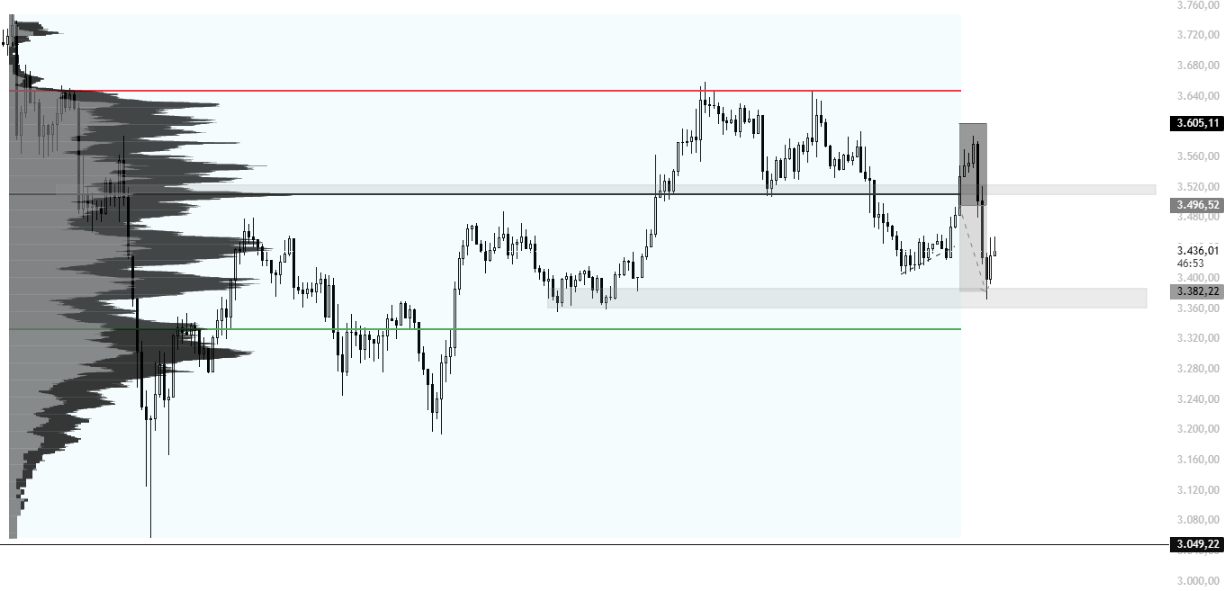
• The new setup was intended as a rejection short from the Point of Control (POC), targeting the Value Area Low (VAL) again.
• The Point of Control was located around 3,510 USD.
• Market environment remained highly correlated with Bitcoin, meaning ETH movements closely mirrored BTC price action.
⸻
2. Entry Trigger
• The plan was to wait for a confirmed 1-hour close below the POC to validate the entry.
• Instead, the trade was front-run again — entry was taken at 3,496 USD, before confirmation.
• The 1-hour candle closed above the POC and even above the grey resistance box, which invalidated the entry under the system’s rules.
• The valid trigger would have been a breakdown and close below the POC.
⸻
3. Trade Details
• Entry: 3,496 USD
• Stop Loss: 3,605 USD
• Take Profit Target: 3,332 USD (Value Area Low)
• Actual Exit: 3,382 USD (early profit-taking)
• Reason for Early Exit:
• Bitcoin and Ethereum showing strong correlation
• ETH reached lower timeframe support before hitting the VAL
• Market likely forming a local bottom at that point
• Result: Profitable trade, but higher stress due to early and invalid entry.
⸻
4. Trade Rationale
• The idea was to trade the rejection from the Point of Control with a mean-reversion target at VAL.
• Execution mistake: Entered before confirmation (again front-run).
• This led to unnecessary drawdown and emotional stress, as the position came very close to the stop-loss.
• Despite poor timing, the trade still worked, mainly due to broader market alignment with BTC weakness.
⸻
5. Execution & Emotions
• Execution quality: Moderate to weak — rules not followed, premature entry.
• Emotional experience: Increased anxiety during drawdown due to lack of confirmation.
• Positive: Maintained composure, managed exit rationally at a technical support.
• Improvement:
• Always wait for 1H close below POC before entry.
• Proper confirmation would have reduced stress and improved trade quality.
• Smarter stop placement after confirmation could have enhanced R:R ratio.
⸻
6. Lesson Learned
• Do not front-run confirmation candles.
• Waiting for the proper signal (1H close below POC) preserves psychological balance, minimizes drawdown, and optimizes risk-reward.
• Discipline > anticipation.
Strategy: Volume Profile (Value Area High, Point of Control, Value Area Low)
⸻
1. Market Context
• The trade was based on the same range traded the previous day.
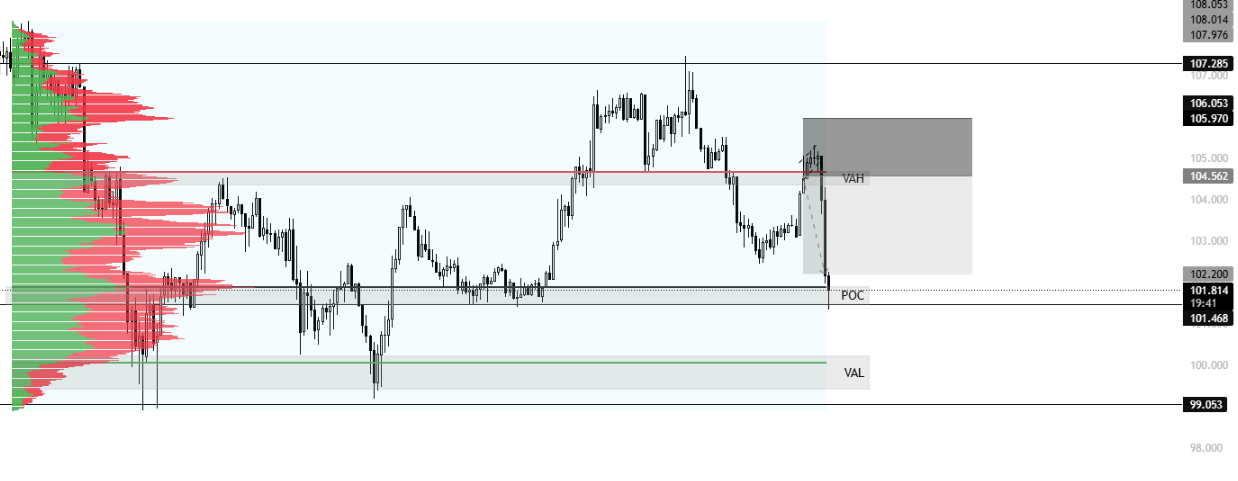
• The prior position was closed at breakeven after the price failed to reach the Point of Control (POC) and then reversed upward.
• Shortly afterward, a new short position was taken once price action provided a fresh entry confirmation.
• On the 1-hour timeframe, price moved back into the Value Area High (VAH) zone, then closed below it, signaling a new short opportunity.
⸻
2. Entry Trigger
• Trigger: 1H candle close below VAH after a retest into the zone.
• Entry Reasoning: Rejection from the upper boundary of the range and confirmation of weakness.
• Stop Placement: Above the last local highs to protect against a retest breakout.
⸻
3. Trade Details
• Entry: 104,562 USD
• Take Profit: 102,200 USD (slightly above POC to avoid front-run risk)
• Stop Loss: 105,970 USD
• Result: Trade executed cleanly, good structure and logic.
⸻
4. Trade Rationale
• Setup aligned with volume profile re-entry pattern: rejection at VAH followed by confirmation close.
• Target positioned slightly above POC for optimal exit.
• Strong confluence between price structure and volume profile levels.
⸻
5. Execution & Emotions
• Execution: Decent overall — could have refined entry slightly higher for better risk/reward, but still valid.
• Emotional state: Calm, controlled, and confident in setup.
• No hesitation or overreaction to the breakeven close from the earlier trade.
• Maintained discipline and trusted the system.
Strategy: Volume Profile (Value Area High, Point of Control, Value Area Low)
⸻
1. Market Context
• Trade taken in a range-bound environment following a sharp downward move.
• The Volume Profile (VAH, POC, VAL) served as the primary structure for the setup.
• Price action remained in consolidation after the drop, offering short opportunities around key levels.
⸻
2. Entry Trigger
• Setup: Short position anticipated on a potential breakdown through the Point of Control (POC).
• Entry: 3,526 USD — taken prematurely, before the POC was actually broken, which goes against the strategy rule.
• Stop Loss: 3,600 USD (above the last significant high).
• The invalid early entry reduced trade quality and increased exposure.
⸻
3. Trade Details
• Entry: 3,526 USD
• Take Profit Target: 3,332 USD (Value Area Low)
• Lowest Price Reached: 3,400 USD (missed optimal exit)
• Actual Exit: 3,472 USD
• Stop Loss: 3,600 USD
• Result: Small profit; partial move captured, but missed ideal exit zone.
⸻
4. Trade Rationale
• The plan was to capitalize on a POC breakdown and target the Value Area Low.
• Execution error: entered early without confirmation and hesitated to take profit at the local low (3,400 USD).
• Decision to hold longer was based on the expectation of a bounce back to POC, offering a second short opportunity.
• However, this reduced trade efficiency and overall profit.
⸻
5. Execution & Emotions
• Execution: Below average — premature entry and delayed profit-taking.
• Emotional state: Controlled, but slightly biased by the expectation of a re-entry opportunity.
• Positive aspect: Maintained composure and clear reasoning despite suboptimal execution.
• Lesson: Respect entry rules strictly
Strategy: Volume Profile (Value Area High, Point of Control, Value Area Low)
-Bitcoin (BTC) Trade
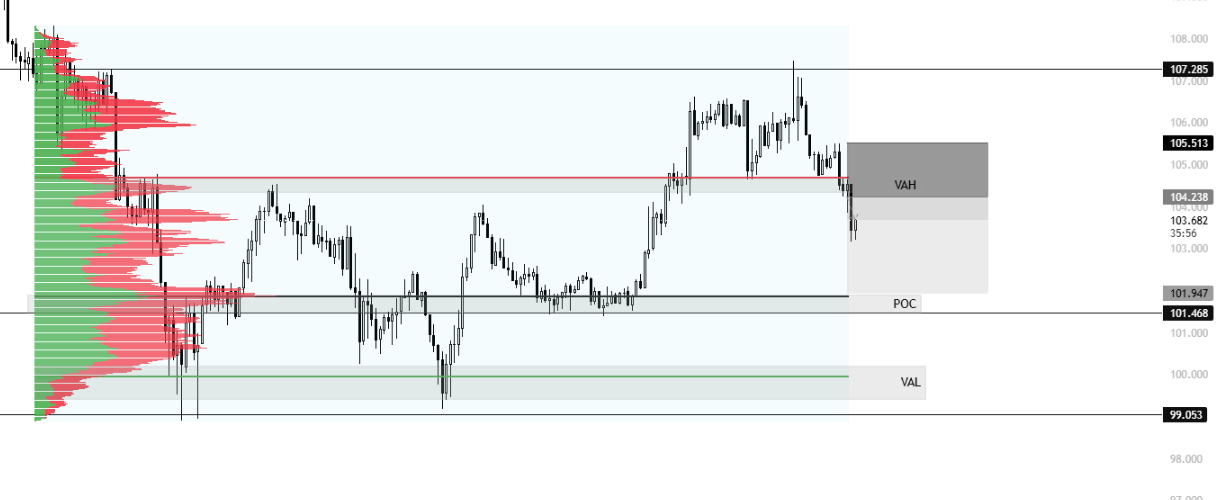
Market Context: • Since Monday, November 3, BTC has been forming a range structure • Range defined by Value Area High, Point of Control, and Value Area Low • On Sunday, November 9, price broke above the Value Area High • By Tuesday (November 10), price fell back below the Value Area High
-Entry Trigger: • Rejection following a fake breakout above the VAH • 1-hour and 4-hour closes below the Value Area High confirmed weakness • Entry taken after the 4H close below VAH
-Trade Details: • Entry: 104,200 USD • Take Profit: 102,000 USD (Point of Control target) • Stop Loss: 105,500 USD
Trade Idea / Rationale: • Short setup based on rejection of the Value Area High • Expectation of a mean reversion move back to the Point of Control
Strategy: Volume Profile (Value Area High, Point of Control, Value Area Low)
⸻
1. Market Context
• Setup was similar to the Bitcoin trade
• Since November 3, SOL has been forming a range that continued through this week
• On Sunday, November 10, price broke above the Value Area High (VAH) and then consolidated
• On higher timeframes (4H and Daily), price ran into a resistance zone and got rejected
• By Tuesday morning (November 11), SOL had fallen back below the VAH
⸻
2. Entry Trigger
• The initial short entry after losing the VAH was missed
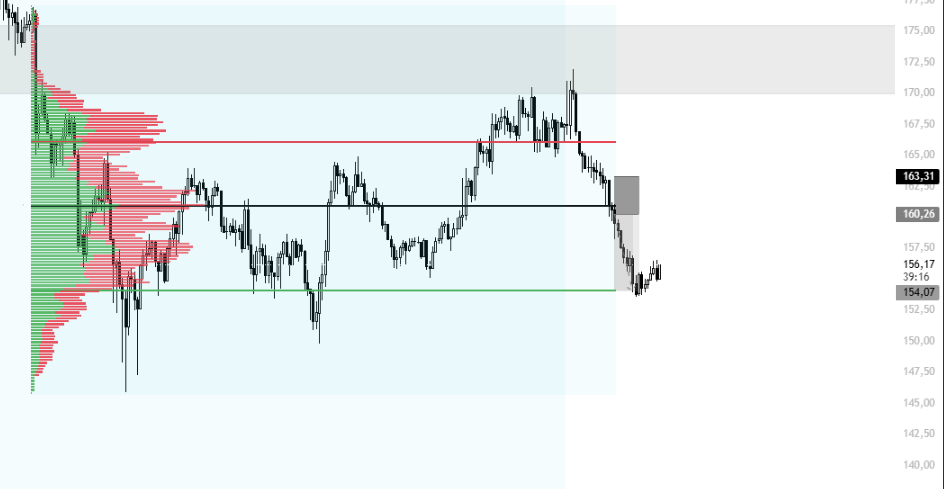
• A second opportunity emerged when SOL lost the Point of Control (POC) on Tuesday evening
• Confirmed by 1-hour and 4-hour closes below the POC
• Entry taken after confirmation close
⸻
3. Trade Details
• Entry: Below Point of Control (exact level not specified)
• Take Profit: Value Area Low (154 USD)
• Stop Loss: 163 USD
• Result: Trade played out well and reached target
⸻
4. Emotions / Trade Psychology
• Calm and confident throughout the trade
• No feeling of haste or pressure
• Good emotional control and adherence to the plan
• Overall a well-executed and disciplined trade